EticShop
01. Problem
How can Etic Europe turn basic printing consumables into a magnet for entirely new B2B markets?
Etic Europe needed to expand beyond its historical textile base. EticShop was designed to capture new B2B clients by selling single-unit consumables like ink rolls, blank stickers, ribbons, and printheads. This accessible entry point strategically opens the door to high-value sales; including MyEticNet, packaging supplies and RFID.
02. UX Challenge
Making industrial equipment familiar and attractive
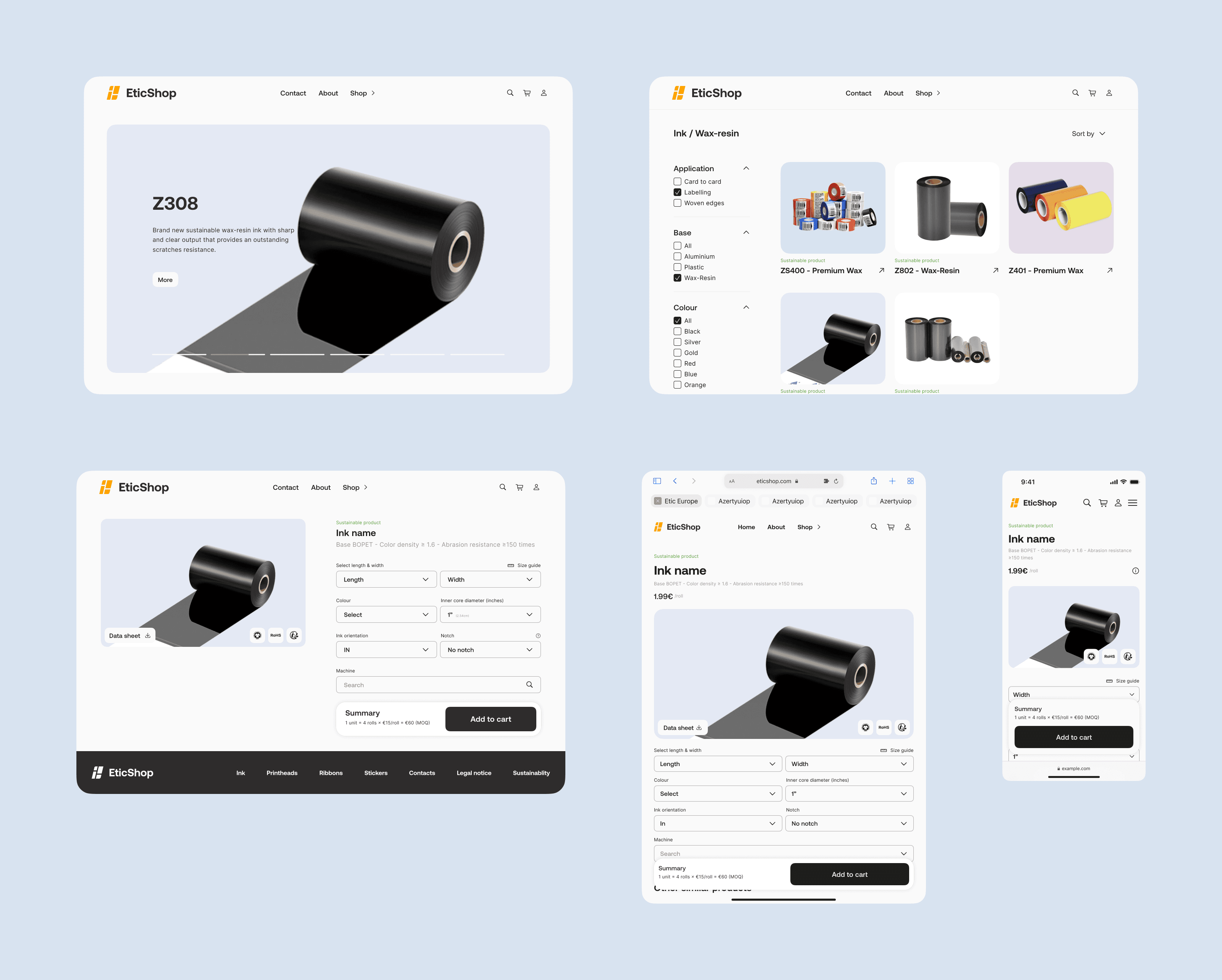
Selling industrial equipment like TTR printheads, ribbons, and ink rolls is rarely considered glamorous. The primary design challenge for Eticshop was to tear down the traditional, austere look of B2B catalogs and transform a purely technical restocking chore into an engaging visual experience.
To achieve this, the interface imports the fluid navigation and reassuring visual cues of mainstream B2C e-commerce into a complex B2B environment. The ultimate goal was to make purchasing highly specific industrial supplies feel as familiar, intuitive, and appealing as everyday online shopping.
03. Product pages
The product pages are the cornerstone of Eticshop’s value proposition, meticulously designed to transform potentially overwhelming technical specifications into a clear, guided purchasing experience for B2B clients. Instead of simply listing products, we developed custom configurators for each of the four main categories (Ink rolls, Stickers, Ribbons, Printheads) to cater to their specific selection logics, eliminating purchase anxiety and ensuring compatibility.
Printhead: direct compatibility check
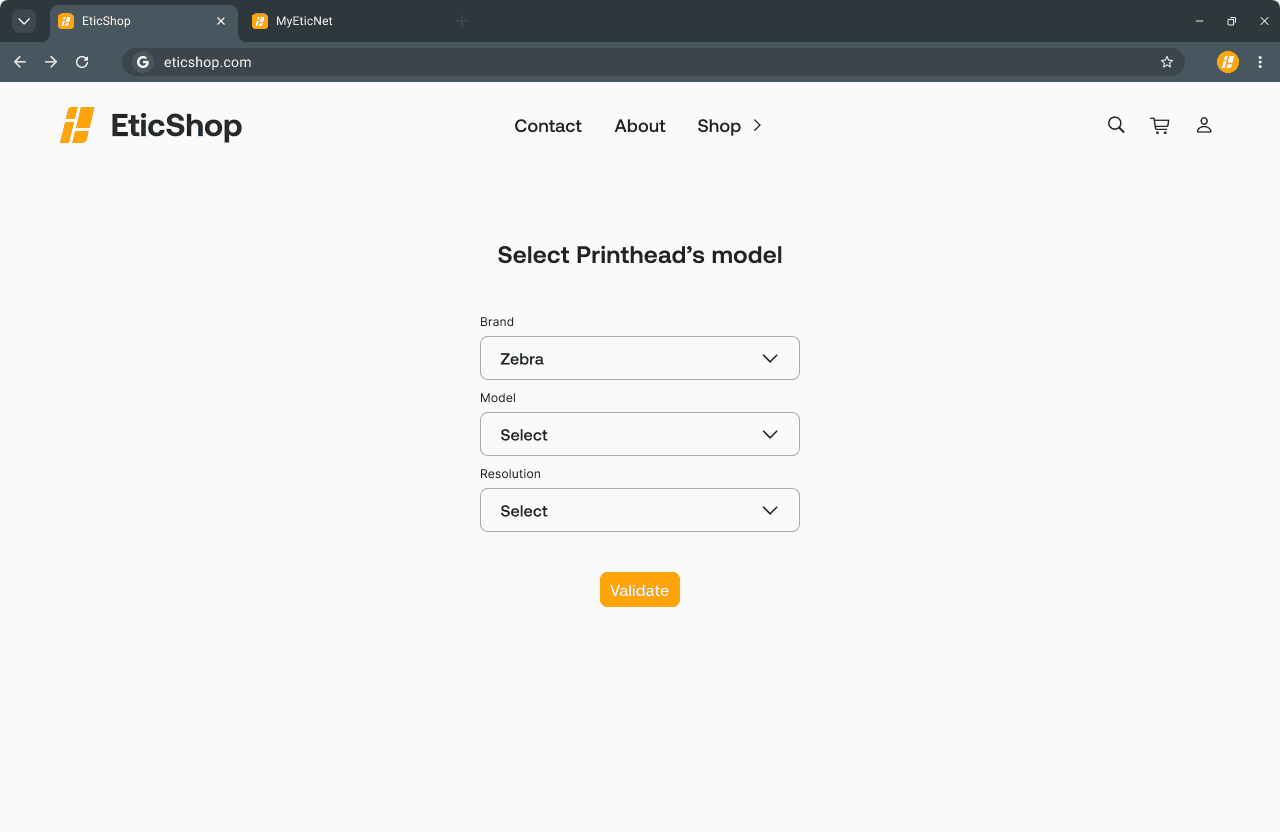
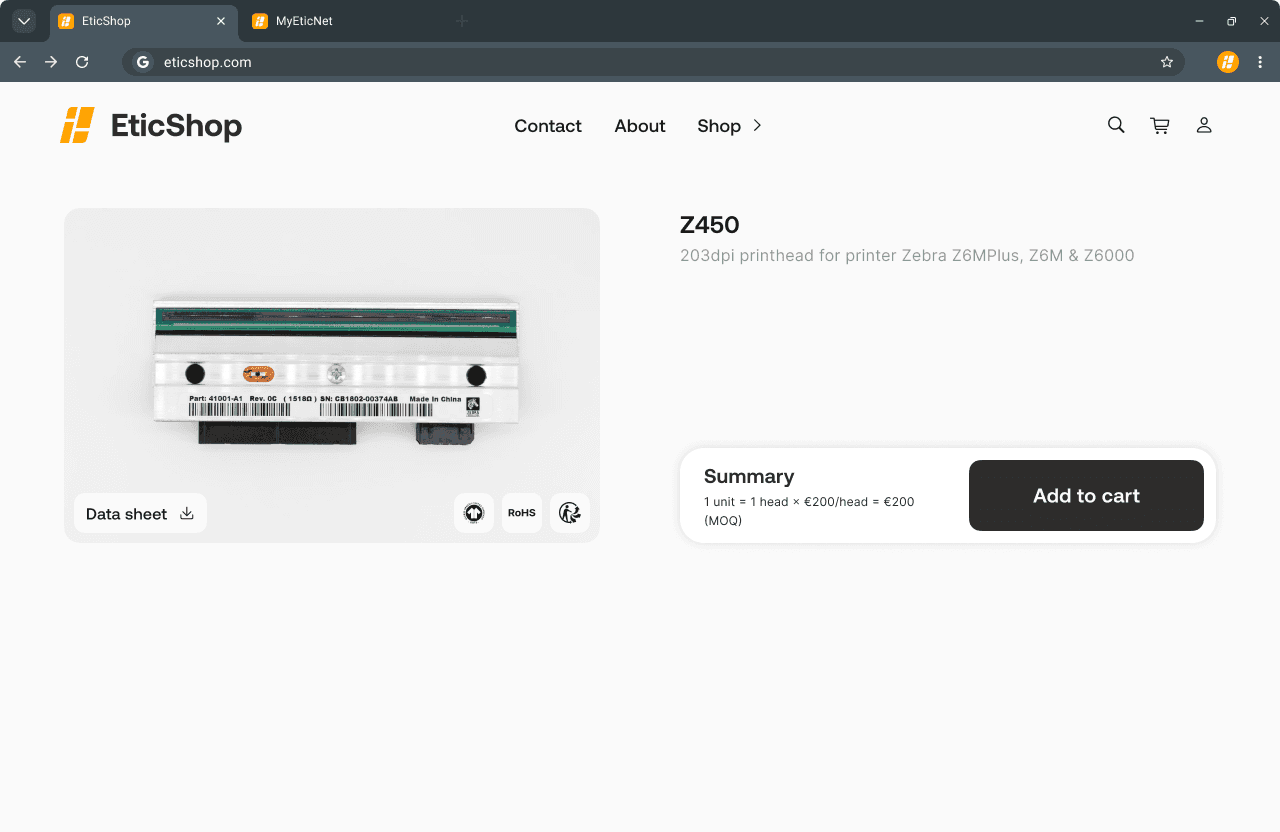
Compatibility is the ultimate friction point. Instead of forcing users to search for obscure part numbers, we designed a machine-first automated selector: Brand > Model > Resolution. The system instantly displays the exact matching printhead. The wireframes below show our transition from dense tables to this frictionless 3-step flow.
Ink Roll: the smart configurator
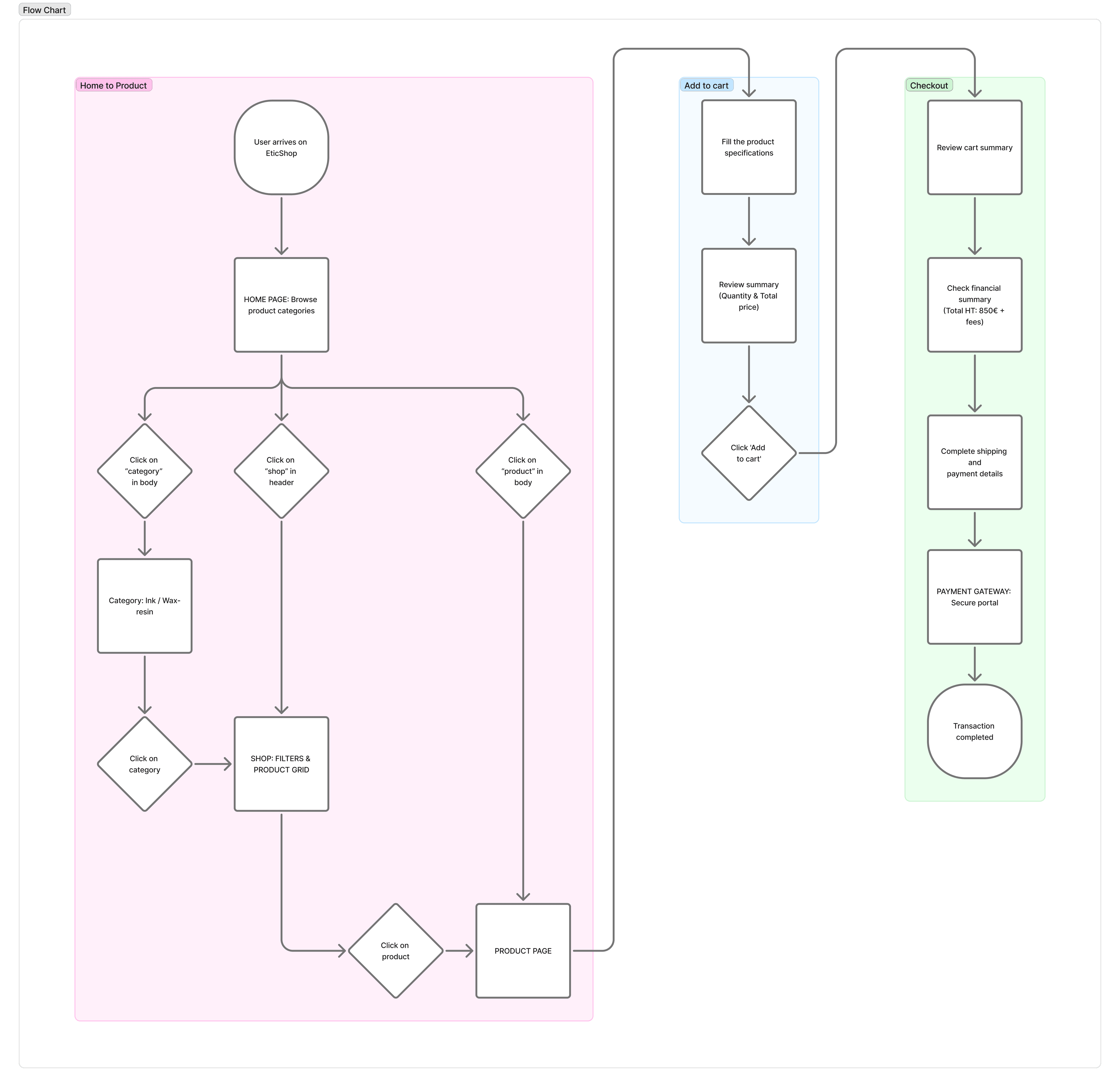
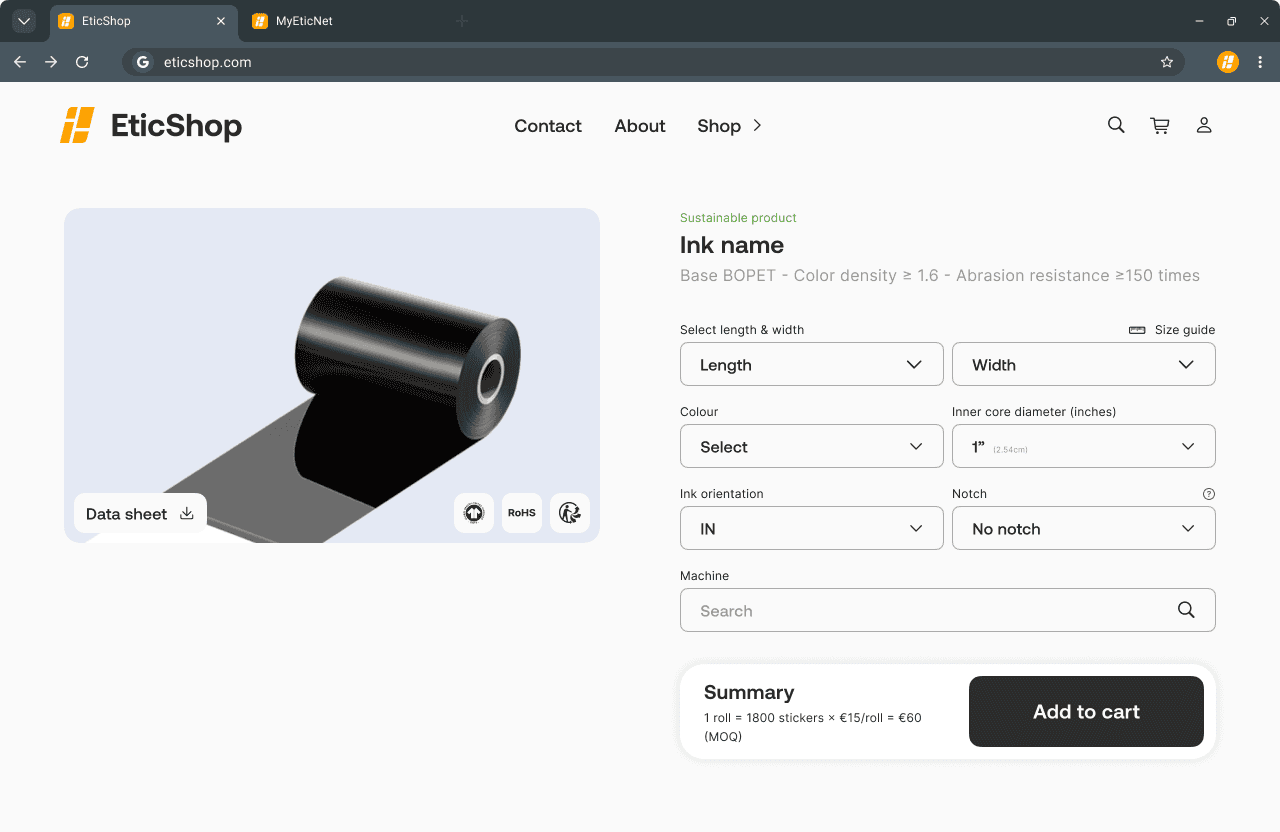
Buying ink rolls requires defining strict parameters: length, width, color, inner core, notch, and machine. To avoid cognitive overload, we replaced traditional static lists with a dynamic, step-by-step configurator. The early sketches next to the flowchart illustrate how we iterated on the UI to present these multiple variables cleanly.
04. User Flow & Information Architecture
B2C Fluidity for B2B Buyers
The checkout and account management phases are where B2B platforms often lose users due to rigid and complex processes. Eticshop solves this by dividing the transaction experience into two tailored pathways: one designed for seamless acquisition and one built for high-speed retention.
New customer pathway (acquisition)
For first-time buyers, the checkout entirely drops the heavy B2B aesthetic. It mirrors the familiar, guided experience of everyday B2C e-commerce, operating much like the frictionless checkout of a modern apparel site. New users follow a straightforward, step-by-step account creation process and can quickly complete their transaction using a standard credit card. The primary goal is to remove any barrier to that crucial first order.
Established client (retention and speed)
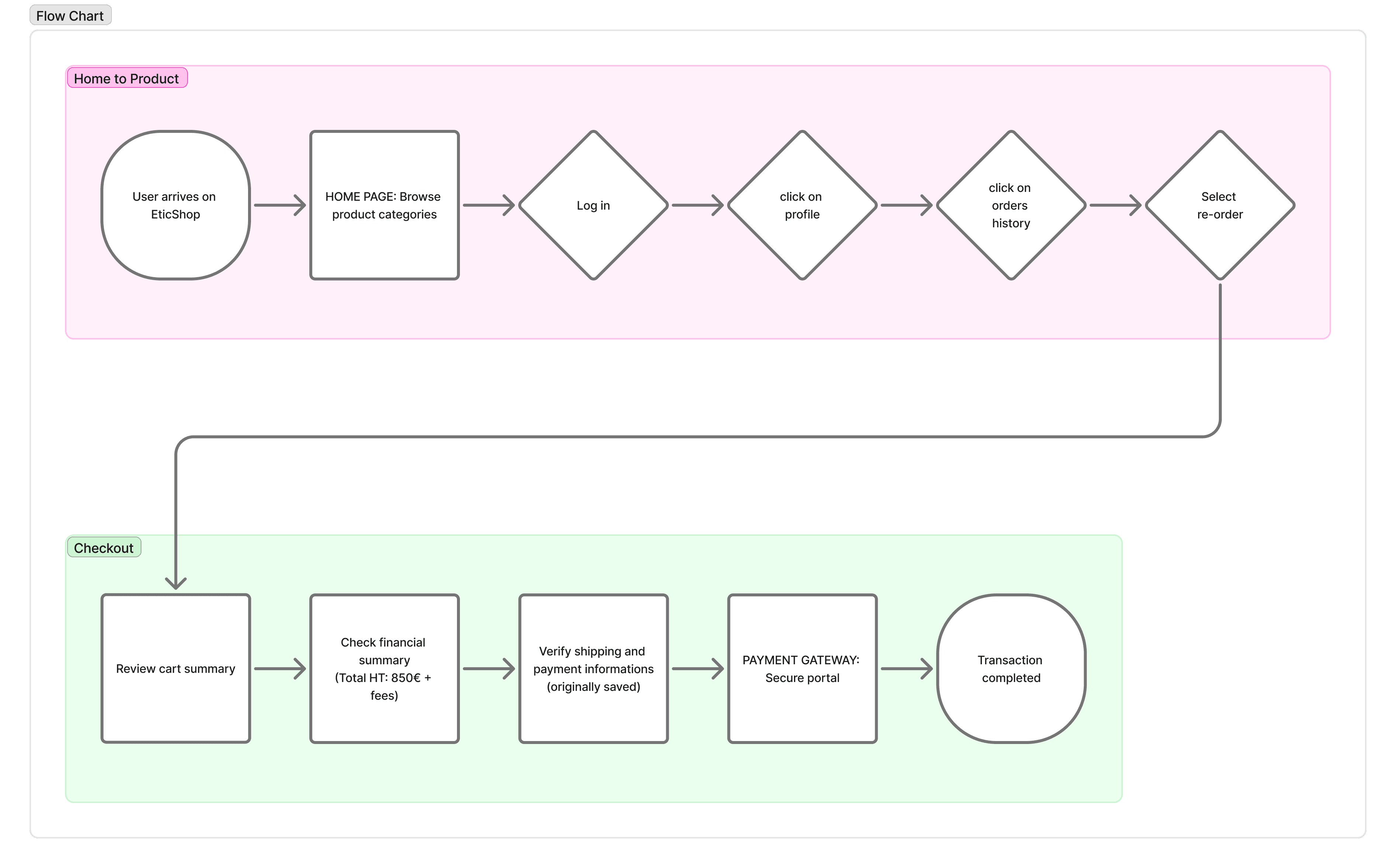
For returning B2B clients, the architecture shifts to prioritize speed and workflow automation. Established buyers have full access to their order history, allowing them to duplicate previous purchases instantly to save time. They also unlock B2B-specific payment flexibility, giving them the choice to pay via a corporate debit account or by credit card.
The "saved machine" ecosystem
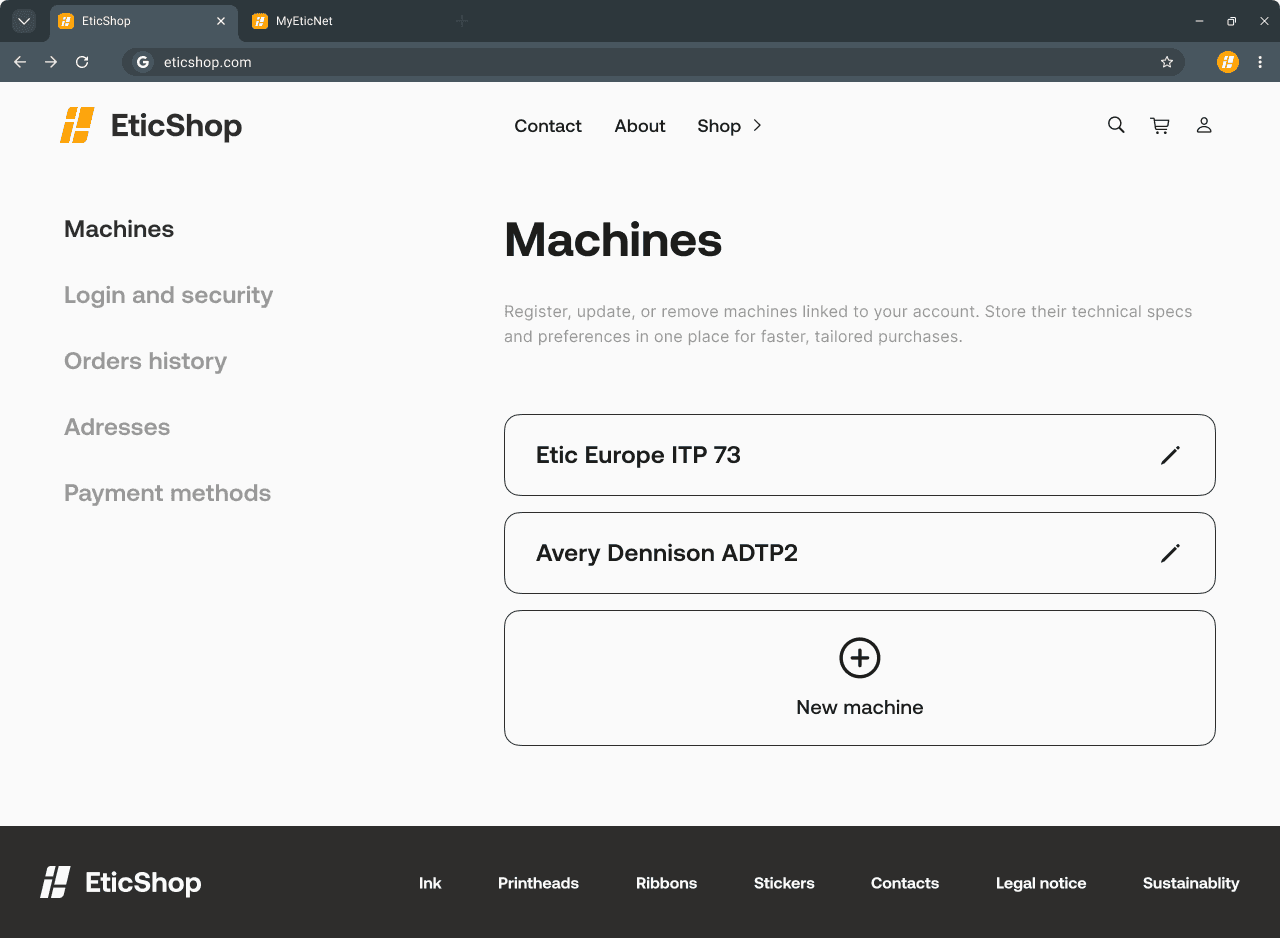
The ultimate retention feature lies in the user profile. Returning clients can save their exact printer models into their account, regardless of whether it is an Etic Europe machine or equipment from another brand. Once a machine is registered, the entire Eticshop catalog automatically filters itself to display only compatible consumables for that specific user. This guarantees zero compatibility errors on future visits and turns the repetitive restocking process into a highly personalized, foolproof experience.
05. Conclusion & expected results
Eticshop is designed as a strategic gateway, turning a basic restocking task into a powerful growth engine. The new platform targets three core outcomes:
Market Diversification: Attracting new buyers from outside the historical textile sector to generate new revenue streams.
UX-Driven Loyalty: Securing repeat business through a frictionless B2B experience, saved machine profiles, and ultra-fast reordering.
The Strategic Bridge: Using a flawless first purchase to introduce new clients to the broader Etic Europe ecosystem, naturally paving the way for high-value sales like TTR machinery.
Next project
Sewow
➔
EticShop
01. Problem
How can Etic Europe turn basic printing consumables into a magnet for entirely new B2B markets?
Etic Europe needed to expand beyond its historical textile base. EticShop was designed to capture new B2B clients by selling single-unit consumables like ink rolls, blank stickers, ribbons, and printheads. This accessible entry point strategically opens the door to high-value sales; including MyEticNet, packaging supplies and RFID.
02. UX Challenge
Making industrial equipment familiar and attractive
Selling industrial equipment like TTR printheads, ribbons, and ink rolls is rarely considered glamorous. The primary design challenge for Eticshop was to tear down the traditional, austere look of B2B catalogs and transform a purely technical restocking chore into an engaging visual experience.
To achieve this, the interface imports the fluid navigation and reassuring visual cues of mainstream B2C e-commerce into a complex B2B environment. The ultimate goal was to make purchasing highly specific industrial supplies feel as familiar, intuitive, and appealing as everyday online shopping.
03. Product pages
The product pages are the cornerstone of Eticshop’s value proposition, meticulously designed to transform potentially overwhelming technical specifications into a clear, guided purchasing experience for B2B clients. Instead of simply listing products, we developed custom configurators for each of the four main categories (Ink rolls, Stickers, Ribbons, Printheads) to cater to their specific selection logics, eliminating purchase anxiety and ensuring compatibility.
Printhead: direct compatibility check
Compatibility is the ultimate friction point. Instead of forcing users to search for obscure part numbers, we designed a machine-first automated selector: Brand > Model > Resolution. The system instantly displays the exact matching printhead. The wireframes below show our transition from dense tables to this frictionless 3-step flow.
Ink Roll: the smart configurator
Buying ink rolls requires defining strict parameters: length, width, color, inner core, notch, and machine. To avoid cognitive overload, we replaced traditional static lists with a dynamic, step-by-step configurator. The early sketches next to the flowchart illustrate how we iterated on the UI to present these multiple variables cleanly.
04. User Flow & Information Architecture
B2C Fluidity for B2B Buyers
The checkout and account management phases are where B2B platforms often lose users due to rigid and complex processes. Eticshop solves this by dividing the transaction experience into two tailored pathways: one designed for seamless acquisition and one built for high-speed retention.
New customer pathway (acquisition)
For first-time buyers, the checkout entirely drops the heavy B2B aesthetic. It mirrors the familiar, guided experience of everyday B2C e-commerce, operating much like the frictionless checkout of a modern apparel site. New users follow a straightforward, step-by-step account creation process and can quickly complete their transaction using a standard credit card. The primary goal is to remove any barrier to that crucial first order.
Established client (retention and speed)
For returning B2B clients, the architecture shifts to prioritize speed and workflow automation. Established buyers have full access to their order history, allowing them to duplicate previous purchases instantly to save time. They also unlock B2B-specific payment flexibility, giving them the choice to pay via a corporate debit account or by credit card.
The "saved machine" ecosystem
The ultimate retention feature lies in the user profile. Returning clients can save their exact printer models into their account, regardless of whether it is an Etic Europe machine or equipment from another brand. Once a machine is registered, the entire Eticshop catalog automatically filters itself to display only compatible consumables for that specific user. This guarantees zero compatibility errors on future visits and turns the repetitive restocking process into a highly personalized, foolproof experience.
05. Conclusion & expected results
Eticshop is designed as a strategic gateway, turning a basic restocking task into a powerful growth engine. The new platform targets three core outcomes:
Market Diversification: Attracting new buyers from outside the historical textile sector to generate new revenue streams.
UX-Driven Loyalty: Securing repeat business through a frictionless B2B experience, saved machine profiles, and ultra-fast reordering.
The Strategic Bridge: Using a flawless first purchase to introduce new clients to the broader Etic Europe ecosystem, naturally paving the way for high-value sales like TTR machinery.
Next project
Sewow
➔
Contact
Let’s bridge the gap together between design & intelligence.
Contact
Let’s bridge the gap together between design & intelligence.
Contact
Let’s bridge the gap together between design & intelligence.
Contact
Let’s bridge the gap together between design & intelligence.
Contact