Dior
01. Problem
Our current paper supplier will stop producing our paper. We need to be greener.
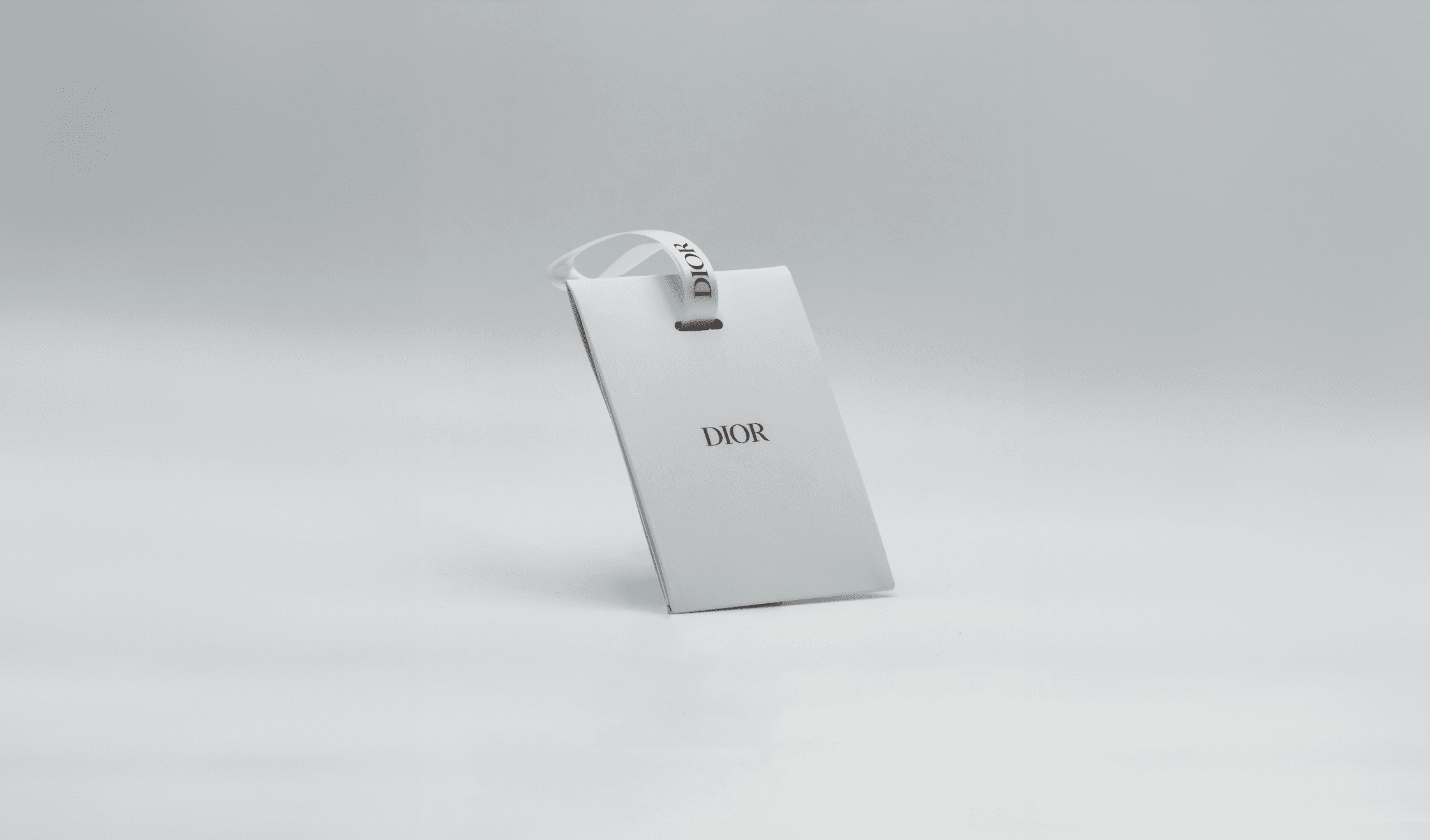
As the paper supplier was facing financial issues, Dior asked me and Etic Europe to design a brand new soft packaging identity. From pouches to hangtags, every soft packaging had to be redone. They needed something green, that was going to help them reducing their carbon footprint.
02. Prototyping
Processes
Throughout the project, I worked in iterative versioning cycles, regularly meeting Dior’s purchasing and artistic direction teams to refine both structure and details. I prototyped a fully glue‑free pouch on a cutting table using a blade and scoring ball, ensuring the architecture could be assembled and held closed solely by the ribbon. All dielines and artworks were created in Illustrator, keeping tight control over tolerances, print areas and constraints while making the solution directly industrialisable.
03. Materials
Paper
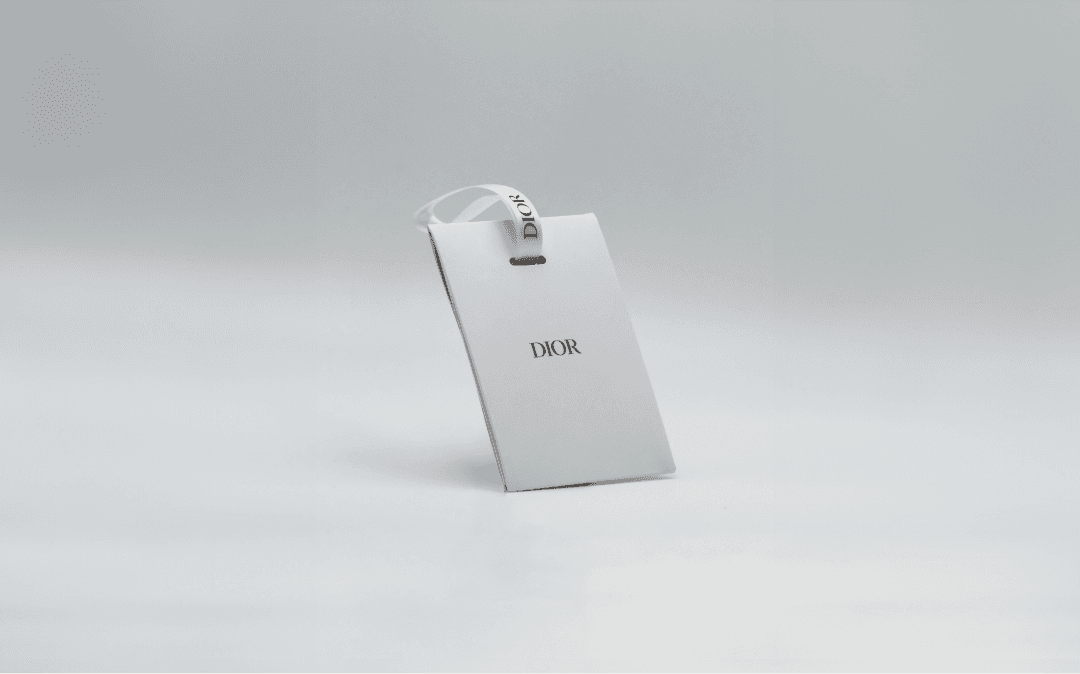
Produced by Favini, this 100% recycled paper blends minimal processing with refined texture, making each sheet subtly unique with organic fibers visible through the surface. Its natural whiteness and firm 350 g weight give the pouch a luxurious yet responsible character, perfectly aligned with Dior’s vision for greener soft packaging.
Ribbon
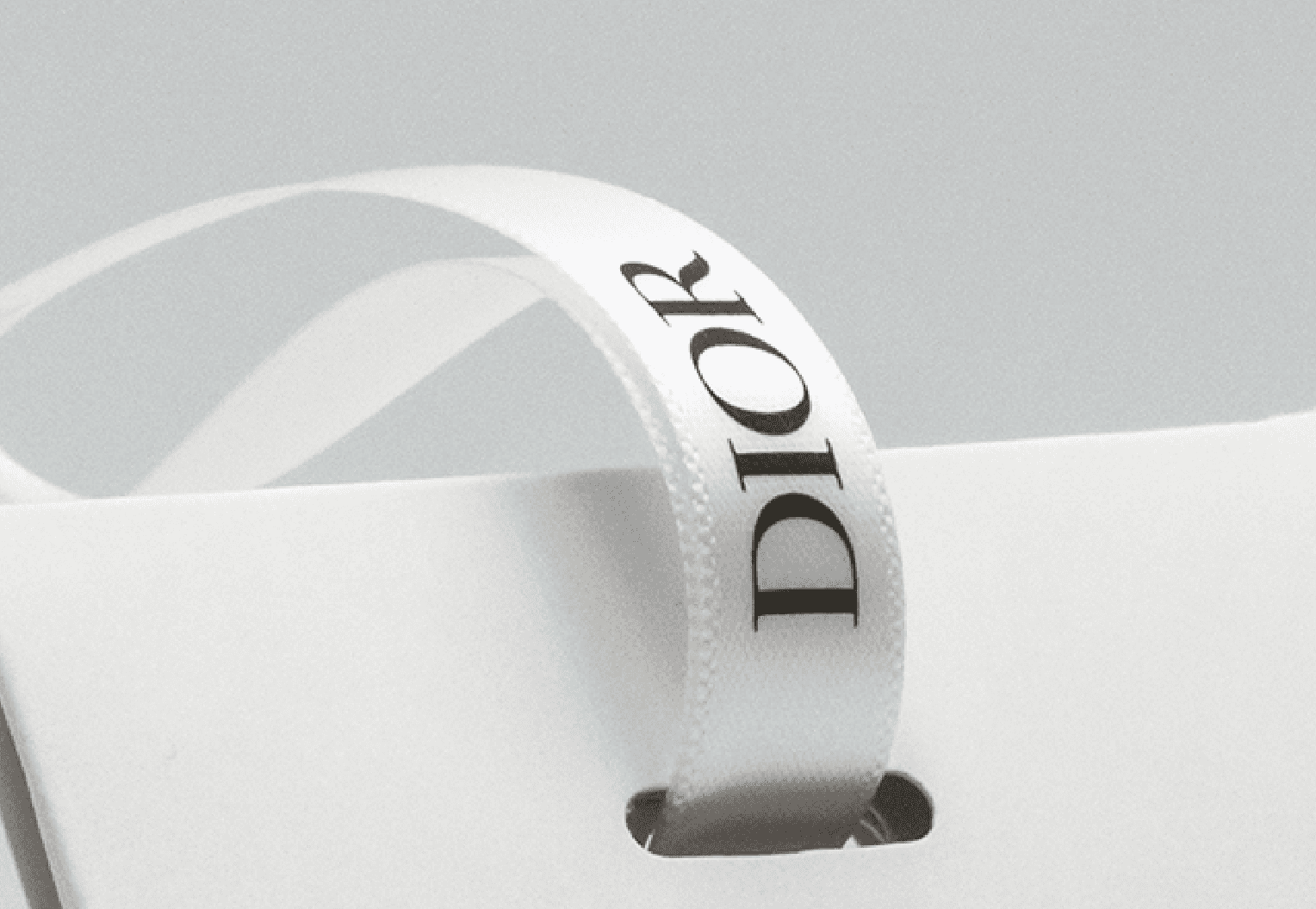
The white satin polyester ribbon, crafted by King, brings a delicate luminosity and smooth finish that echo the pouch’s softness. Made for flexographic printing, it features woven edges and water-based inks.
Rope
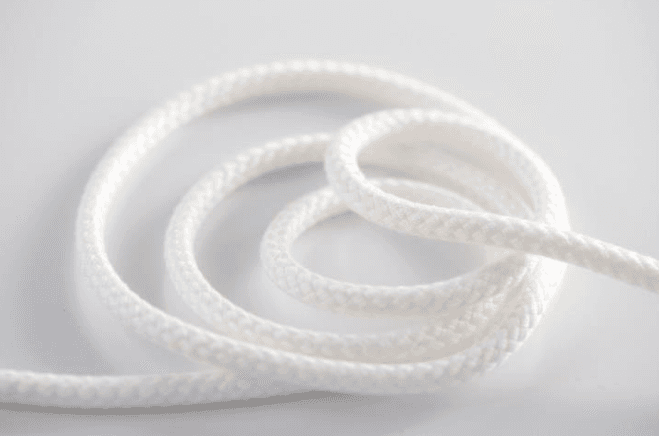
We sourced the cord from Oriol & Fontanel, using a Tencel-based (wood fiber) yarn made from responsibly sourced wood pulp and produced in a low-impact, closed-loop process. Soft but resistant, it gives the pouch a natural, matte look that reinforces its eco-conscious identity.
04. Final product
Making packaging with 100% recycled paper and polyester without a single glue drop.
Pouch
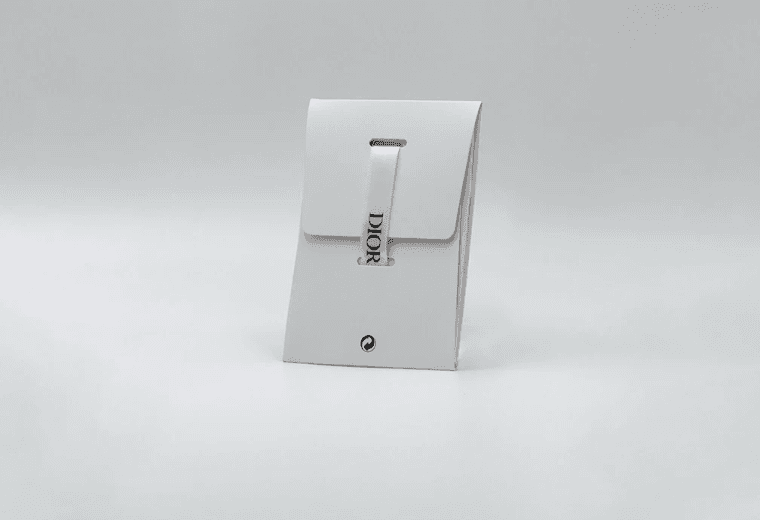
This pouch initially presented a key issue: the original paper was plastic-coated and therefore non-recyclable. I completely rethought the construction, designing a glue‑free architecture that is held closed by the ribbon alone. With its “accordion” structure, two folds on the front and one on the back, the pouch naturally adjusts to the thickness of each button, ensuring both protection and a precise, tailored fit.
The 100% satin ribbon supplied by King is printed with water-based inks and sealed using an ultrasonic welding technique I developed, eliminating the need for glue to create closed loops. This speeds up production for Etic Europe’s factories while contributing to a lower overall carbon footprint.
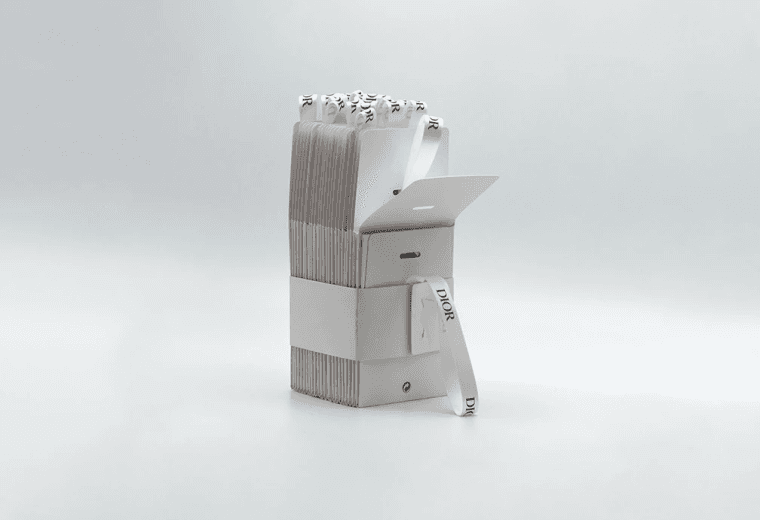
Pouches are conditioned together by pack of 20, using a belt made of the same paper on the same sheet than the pouches to ensure the use of the maximum surface of this same sheet. This prevents the use of plastic and helps reducing paper wastes.
Hangtags
Using the same paper and Tencel-based yarn, I developed a full hangtag system. Each format was carefully dimensioned to optimise paper usage, while the cord, printing and finishes were calibrated to echo the pouch’s look and feel.
05. Informations
I worked on this project from November 2021, when I first met Dior’s teams to present the initial pouch concept; through to February 2022, when I visited the Egyptian factory responsible for producing the pouch and all associated hangtags.
During this time, I introduced new processes, trained the teams in the ultrasonic ribbon welding technique, and later supported the same transition when production moved to Portugal in 2023.
Next project
Crown Quest
➔
Dior
01. Problem
Our current paper supplier will stop producing our paper. We need to be greener.
As the paper supplier was facing financial issues, Dior asked me and Etic Europe to design a brand new soft packaging identity. From pouches to hangtags, every soft packaging had to be redone. They needed something green, that was going to help them reducing their carbon footprint.
02. Prototyping
Processes
Throughout the project, I worked in iterative versioning cycles, regularly meeting Dior’s purchasing and artistic direction teams to refine both structure and details. I prototyped a fully glue‑free pouch on a cutting table using a blade and scoring ball, ensuring the architecture could be assembled and held closed solely by the ribbon. All dielines and artworks were created in Illustrator, keeping tight control over tolerances, print areas and constraints while making the solution directly industrialisable.
03. Materials
Paper
Produced by Favini, this 100% recycled paper blends minimal processing with refined texture, making each sheet subtly unique with organic fibers visible through the surface. Its natural whiteness and firm 350 g weight give the pouch a luxurious yet responsible character, perfectly aligned with Dior’s vision for greener soft packaging.
Ribbon
The white satin polyester ribbon, crafted by King, brings a delicate luminosity and smooth finish that echo the pouch’s softness. Made for flexographic printing, it features woven edges and water-based inks.
Rope
We sourced the cord from Oriol & Fontanel, using a Tencel-based (wood fiber) yarn made from responsibly sourced wood pulp and produced in a low-impact, closed-loop process. Soft but resistant, it gives the pouch a natural, matte look that reinforces its eco-conscious identity.
04. Final product
Making packaging with 100% recycled paper and polyester without a single glue drop.
Pouch
This pouch initially presented a key issue: the original paper was plastic-coated and therefore non-recyclable. I completely rethought the construction, designing a glue‑free architecture that is held closed by the ribbon alone. With its “accordion” structure, two folds on the front and one on the back, the pouch naturally adjusts to the thickness of each button, ensuring both protection and a precise, tailored fit.
The 100% satin ribbon supplied by King is printed with water-based inks and sealed using an ultrasonic welding technique I developed, eliminating the need for glue to create closed loops. This speeds up production for Etic Europe’s factories while contributing to a lower overall carbon footprint.
Pouches are conditioned together by pack of 20, using a belt made of the same paper on the same sheet than the pouches to ensure the use of the maximum surface of this same sheet. This prevents the use of plastic and helps reducing paper wastes.
Hangtags
Using the same paper and Tencel-based yarn, I developed a full hangtag system. Each format was carefully dimensioned to optimise paper usage, while the cord, printing and finishes were calibrated to echo the pouch’s look and feel.
05. Informations
I worked on this project from November 2021, when I first met Dior’s teams to present the initial pouch concept; through to February 2022, when I visited the Egyptian factory responsible for producing the pouch and all associated hangtags.
During this time, I introduced new processes, trained the teams in the ultrasonic ribbon welding technique, and later supported the same transition when production moved to Portugal in 2023.
Next project
Crown Quest
➔
Contact
Let’s bridge the gap together between design & intelligence.
Contact
Let’s bridge the gap together between design & intelligence.
Contact
Let’s bridge the gap together between design & intelligence.
Contact
Let’s bridge the gap together between design & intelligence.
Contact